Canada’s LNG buildout: Geopolitical windfall or bull trap?
Key Findings
The war in the Middle East is reshaping global energy markets.
Energy prices are rising due to geopolitical volatility, not structural increases in demand.
Canadian investors risk walking into a “bull trap” that wrongly assumes long-term changes in a market.
Investors should be wary of locking capital into 20- and 30-year deals that assume structural change is occurring, rather than short-term volatility.
The Sept. 14-15 Canada Investment Summit in Toronto will be a crucial moment to take stock of the global gas market and properly evaluate the LNG projects topping Ottawa’s list of investable opportunities.
Without a clear-eyed look at underlying market dynamics, Canada and institutional capital risk walking into a classic market “bull trap”—mistaking brief or transient market conditions for lasting, structural shifts in long-term fundamentals.
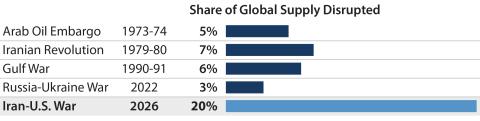
There is no doubt that the conflict in the Middle East is reshaping global energy markets. The closure of the Strait of Hormuz bottled up almost 20% of global liquefied natural gas (LNG) shipments, sending LNG spot prices to their highest levels in more than three years.
But the current price action is largely driven by geopolitical volatility rather than structural increases in gas demand. Conflict-driven price spikes are unlikely to translate to improved project economics, especially if those same spikes erode long-term demand.
Capital-intensive LNG projects are multi-decade operations that require long-term stability in demand, supply, and prices. To materially improve returns, elevated market conditions must persist for a significant portion of a terminal’s operating life—not just a few months or years. Capital expenditure for greenfield LNG in Canada remains exceptionally high due to factors such as remote geography and infrastructure costs; conflict-related spot price spikes will not solve these structural capital hurdles.
Energy markets have a long history of rebalancing. Whenever fuel prices spike, consumer markets tend to trim demand, boost efficiency, and switch to cheaper energy sources. The inevitable market reaction to these spikes pushes prices down and can even permanently suppress demand, undermining long-term market prospects.
There’s also the possibility of a negotiated resolution to the current conflict. Resumption of LNG traffic through the Strait of Hormuz would release stranded volumes back into the market and accelerate repairs to damaged Persian Gulf energy infrastructure, flooding global markets with new gas.
Supply is expected to grow quickly as a major wave of global production capacity comes online later this decade. Major LNG projects are already under development in Canada, the U.S., Russia, Mozambique, Nigeria, and Mexico. Several new projects have already been authorized this year in the wake of the turmoil in the Persian Gulf. Despite the short-term disruption, global LNG supplies are still expected to rise more than 40% by 2032. This tsunami of supply could create future market conditions substantially different from today’s and further weaken the case for high-cost Canadian LNG.
Industry advocates have pointed to some upside from the crisis. LNG buyers burnt by recent disruptions may seek to diversify their suppliers in the future to improve energy security and reduce delivery risk. This may create an opening for Canadian LNG, which is perceived as stable and insulated from conflict zones.
However, frustrated importing countries are pursuing another goal alongside supply diversification: reducing reliance on imported fossil fuels altogether. The same forces that may enhance Canada’s attractiveness as a stable LNG supplier in the short term are also accelerating policy and investment decisions that could limit growth in the sector over the long-term.
After experiencing the second supply crisis in five years, key LNG-importing regions in Europe and Asia are raising long-term renewable energy targets, expanding much less expensive, quicker-to-deploy solar adoption to record levels, restarting nuclear capacity, and introducing policies to accelerate domestic energy production.
The twin oil crises of 1973 and 1979—both caused by conflict-driven disruptions to global energy supply—triggered market responses that permanently altered the trajectory of global fossil fuel consumption.
History may not repeat itself, but it often rhymes, and that dynamic may be reemerging today.
The sale of electric vehicles hit record highs in 37 countries in April, and Chinese solar exports—already at record levels before the U.S.-Israel-Iran conflict—have doubled since the war began. The increasingly competitive economics of renewable energy mean these trends may be difficult to reverse, even long after hostilities cease.
Canada is increasing its clean energy production, including for export, as seen by the $36 billion deal signed between Hydro-Quebec and Newfoundland and Labrador. While current supply disruption may spark renewed enthusiasm for energy outside the volatile Persian Gulf, including Canada, caution is warranted before interpreting it as durable fundamental support, which is the classic setup for a bull trap.
For long-term investors gathering in Toronto in September, including public pension funds, sovereign wealth funds, and insurers, the challenge is recognizing that both short- and long-term forces operate in parallel, and can pull outcomes in different directions over different time horizons. Locking Canadian capital into 20- to 30-year fossil fuel infrastructure on the back of a short-term crisis is bad risk management—and a trap that Canadian investors should avoid.
Related Research