Liability for Texas orphan wells soars as numbers, depths, and costs rise sharply
Key Findings
The bill for plugging and remediating orphan wells in Texas has risen to $202 million.
The record amount is due to rising depths and numbers of orphan wells, as well as increased costs.
The state’s skyrocketing liability can be traced to an industry that collectively shirks its cleanup responsibilities.
Taxpayers, rather than the oil and gas industry, are shouldering an increasing amount of the burden for cleaning up after orphan wells.
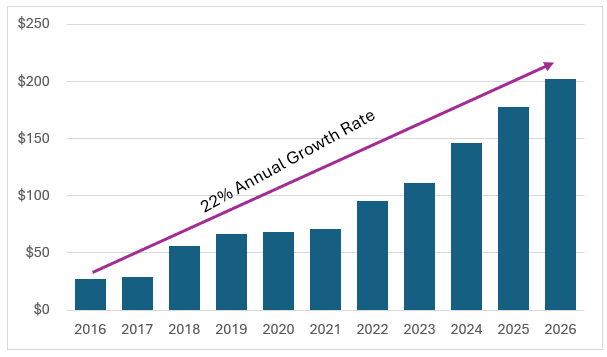
The Railroad Commission of Texas—the agency responsible for regulating Texas’s oil and gas industry—has reported runaway costs for plugging and remediating so-called “orphan” wells. The commission estimates that it will cost $202 million to plug its inventory of orphan wells approved for state-funded remediation and decommissioning, the highest total in the program’s history. (See Figure 1.) Texas is on a well-plugging hamster wheel whose liability has grown with each passing year.
Figure 1. Estimated Cost to Plug “Approved” Orphan Wells, Million USD
Source: Railroad Commission of Texas—Monthly State Managed Plugging Activities
The commission, which was given authority over Texas oil pipelines in 1917 and oil production in 1919, considers an oil or gas well orphaned if it has produced no hydrocarbons for a year and its paperwork has been delinquent for the same period. Each year, the agency approves a portion of those orphaned wells to its cleanup rolls for plugging and estimates its obligations based on the projected plugging costs for each included well.
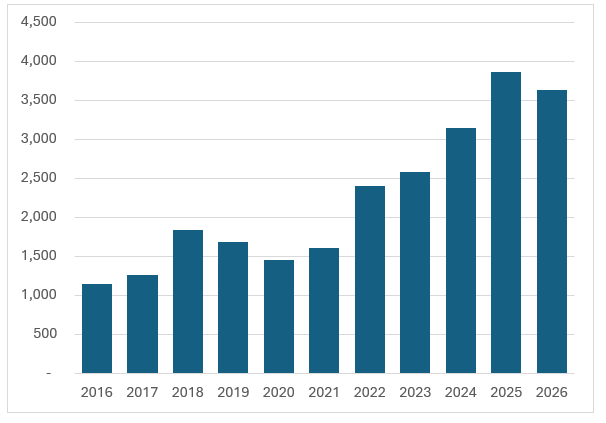
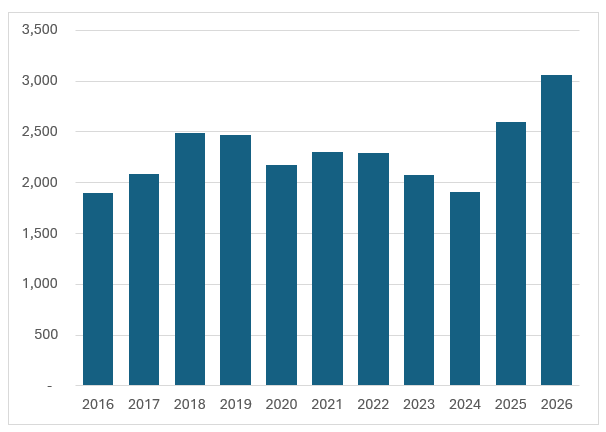
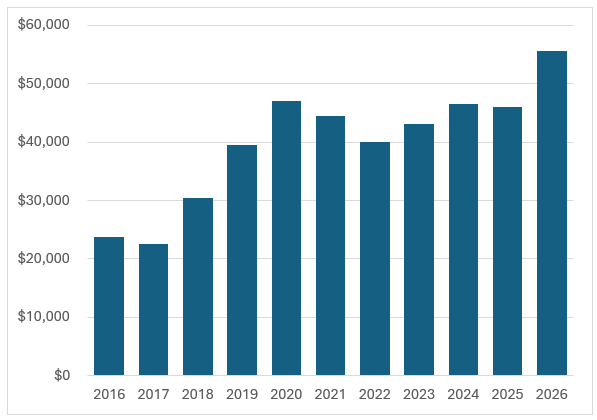
The rising cost of plugging orphan wells can be traced to three trends: a rising number of confirmed orphans approved for plugging, an increasing average depth of orphan wells added, and a rapid increase in the average cost of individual wells. (See Data Appendix, Figures A1, A2, and A3.) As of March 2026, the Railroad Commission had approved state-funded plugging for 3,632 orphan wells, an all-time high. The average depth of plugged orphaned wells increased 61% over the decade to 3,062 feet, also a record. Finally, per-well plugging costs have soared from $23,807 in 2016 to $55,629 in 2026.
These three trends—more orphan wells, deeper orphan wells, and higher plugging costs—have combined to increase the state’s plugging liability by an average of 22% per year since 2016. As this trend continues, taxpayers will subsidize the multi-million-dollar costs of plugging orphans and remediating associated soil and water contamination—all while the remaining cost of plugging the backlog of orphans continues to grow.
All told, from 1984 through March 2026, Texas spent $575 million to plug 47,757 orphaned wells left behind by noncompliant or defunct oil and gas operators.
The state’s skyrocketing orphan well liability can be traced to an oil and gas industry that collectively shirks its cleanup responsibilities (leading to orphaned oil and gas wells) faster than plugging occurs. The March 2026 Railroad Commission of Texas Monthly State Managed Plugging Report shows 156,664 shut-in/inactive wells, with 46% of active well operators having more than 25% of their wells inactive.
Recognizing the growing fiscal challenge facing the Railroad Commission, the Texas Legislature appropriated a one-time $100 million infusion into the State Managed Plugging Program last year. This means that the cost of cleaning up orphan wells is increasingly falling on the state’s taxpayers, rather than on the oil and gas companies that originally drilled the wells and profited from their production.
Appendix
Data Appendix
Figure A1: Number of orphan wells identified by the RRC remaining to plug.
Source: Railroad Commission of Texas – Monthly State Managed Plugging Activities
Figure A2: Average depth of wells plugged.
Source: Railroad Commission of Texas – Monthly State Managed Plugging Activities
Figure A3: Average cost per well to plug remaining orphan wells.
Source: Railroad Commission of Texas – Monthly State Managed Plugging Activities
Related Research